
The number 7 on the bottom of a water bottle tells you almost nothing about whether it is safe. It is a catch-all code for “other” plastics, and it covers materials with very different chemistry. Polycarbonate (PC) is made from bisphenol A (BPA). Tritan copolyester is not. Yet both can carry the same 7.
For brand owners, that ambiguity has stopped being a labelling curiosity. Since 20 July 2026, reusable food-contact articles made with BPA can no longer be placed on the EU market for the first time under Regulation (EU) 2024/3190. Being able to prove which plastic a bottle is made from is now a market-access question, not just a marketing one. In this article, our product team explains what the 7 really means, where PC stands with regulators, how Tritan differs, and how buyers can verify what they are getting.
What the Number 7 on a Water Bottle Really Means
Resin identification codes 1 to 6 each point to one specific polymer, such as PET (1) or polypropylene (5). Code 7 means “other”: every plastic that does not fit the first six. When ASTM International revised the system as ASTM D7611 in 2013, it replaced the familiar chasing-arrows symbol with a solid-outlined triangle, precisely because people kept reading the code as a recycling or safety signal. It was only ever meant to help sort plastics.
Under that single number sit polycarbonate, Tritan and other copolyesters, styrene-acrylonitrile (SAN), polylactic acid (PLA) and more. Their heat resistance, clarity and chemistry differ widely. If you want a refresher on the full set of codes, our guide to the symbols molded into a bottle’s base walks through each one.
There is a more informative mark, and it is worth looking for. Material abbreviations molded into the part, such as “>PC<” or a copolyester designation, name the actual polymer. At Haers, every plastic part with a markable surface of at least 1 cm² carries its material abbreviation under GB/T 16288, China’s counterpart to ISO 11469. That small detail answers the question the number 7 cannot.
Is PC (Polycarbonate) Safe to Drink From?
Polycarbonate earned its place in drinkware for good reasons: it is clear, rigid and very tough. The concern is the building block. PC is polymerised from BPA, and small amounts can come back out, either as residual monomer or as the polymer slowly breaks down in hot water.

Heat Is the Main Trigger
The clearest evidence comes from a University of Cincinnati study published in Toxicology Letters in 2008. When polycarbonate drinking bottles were exposed to boiling water, the rate of BPA release rose from 0.2–0.8 nanograms per hour to 8–32 nanograms per hour, an increase of 15 to 55 times. Bottles that had been used for up to nine years released the same amount as new ones. The deciding factor was the temperature of the liquid, not the age of the bottle.
That finding shapes everything that follows. A PC bottle used for cold water sits at one end of the risk range; one that is filled with hot drinks, washed in a hot dishwasher, or left in a hot car sits at the other.
Where Regulation Stands
European Union. Regulation (EU) 2024/3190 entered into force on 20 January 2025. Article 3 prohibits the use of BPA in manufacturing food-contact plastics, varnishes and coatings, adhesives, printing inks, rubbers, silicones and ion-exchange resins. Article 5 extends the ban to other hazardous bisphenols unless specifically authorised. For repeat-use final articles such as bottles, Article 12 allowed products made with BPA to be placed on the market until 20 July 2026, and they may remain on the market no later than 20 January 2029.
United States. In July 2012, FDA amended 21 CFR 177.1580 so that polycarbonate resins are no longer authorised for infant feeding bottles and spill-proof sippy cups (77 FR 41899). It is worth stating this accurately: FDA made the change because industry had already abandoned those uses, and the agency said explicitly that the amendment was not based on a safety finding. Separately, California listed BPA under Proposition 65 on 11 May 2015 for female reproductive toxicity.
China. A joint announcement by six ministries (2011, No. 15) banned the production of polycarbonate infant feeding bottles and other BPA-containing infant bottles from 1 June 2011, and their import and sale from 1 September 2011.
These regulators have not all reached the same conclusion, and it would be misleading to suggest otherwise. But the direction of travel is the same everywhere: products for infants first, and in Europe now all food-contact uses, are moving away from BPA.
Why “BPA-Free” Is No Longer the Whole Answer
The EU regulation also closes the most obvious workaround. Swapping BPA for a closely related bisphenol does not solve the problem: Article 5 prohibits other bisphenols classified as hazardous unless they are specifically authorised, and Article 4 does not allow residual BPA in materials made with another bisphenol. A product can therefore be honestly labelled “BPA-free” and still fall outside the rules. For buyers, the more useful question is whether a material is made without any bisphenol at all, and whether the supplier can document it.
Tritan vs. PC: Same Recycling Code, Different Chemistry
Tritan is a copolyester developed by Eastman. Test laboratories typically identify it by its monomers: dimethyl terephthalate, 1,4-cyclohexanedimethanol and 2,2,4,4-tetramethyl-1,3-cyclobutanediol. No bisphenol appears in that list. Eastman states that Tritan is free of BPA and BPS: neither has ever been used as a raw material, neither forms as a by-product, and third-party laboratories have confirmed the material is free of estrogenic and androgenic activity.
Tritan is not a free pass on heat, though. “Tritan” is a family of grades, and heat performance belongs to the grade, not the family. Eastman lists the general-purpose grade TX1001 at 99 °C heat deflection temperature (0.455 MPa) with no boiling-water claim, while it states boiling-water sterilisation only for specific grades such as the infant-care grade Tritan EX501. So “BPA-free” and “suitable for boiling water” are two separate claims: the first applies to the material family, the second must be confirmed grade by grade with your water bottle supplier.
| Polycarbonate (PC) | Tritan copolyester | |
|---|---|---|
| Building blocks | Made from bisphenol A | DMT, CHDM and TMCD; no bisphenols |
| Behaviour in heat | BPA release rises 15–55× with boiling water (Le et al., 2008) | Grade-specific: TX1001 99 °C HDT, no boiling claim; boiling-water sterilisation stated only for certain grades (e.g. EX501) |
| EU status | Repeat-use articles made with BPA: first placing on market ended 20 July 2026 | Permitted |
| Resin code | 7 | 7 |
How to Tell PC From Tritan When Both Say “7”
What Consumers Can Check
By eye, you usually cannot. Both materials are clear, glossy and rigid. What helps is information printed or molded on the product: a material abbreviation on the part, the word “Tritan” on the bottle or its packaging, and a material list in the instructions. A brand that uses Tritan generally says so; a 7 with no further information is a reason to ask.
What Brand Buyers Should Verify
For a buyer, “trust the label” is not enough. These five checks turn a material claim into evidence:
- Read the test report’s chemical names, not just the trade names. Laboratories often describe resins by their monomers, and the abbreviation they use may not be the brand name. A Tritan-type copolyester can appear under a generic polyester abbreviation followed by its monomer list. If you can read the monomers, you can confirm there is no bisphenol.
- Ask for food-contact testing on the finished parts. In China, plastic parts are tested under GB 4806.7-2023: overall migration in 4% acetic acid and 10% ethanol (70 °C, 2 hours, repeated three times), potassium permanganate consumption, heavy metals, decolourisation and primary aromatic amines. For other markets, ask for the equivalent report.
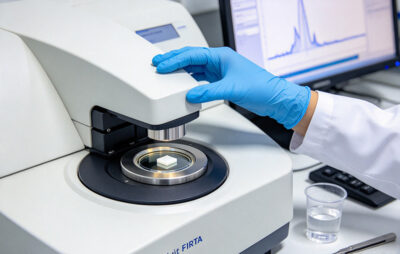
- Use infrared identification when in doubt. Fourier-transform infrared spectroscopy (FTIR) can distinguish polymer families from a small sample; the general method is set out in ASTM E1252.
- For the EU, request a Declaration of Compliance. Article 8 of Regulation (EU) 2024/3190 requires one, with supporting documentation, for materials within its scope.
- Write material change control into the contract. Require advance notice and re-testing before any resin substitution in mass production. Most material problems start with an unannounced switch, not with the approved sample.

Should Brands Still Use PC for Drinkware?
For new reusable drinkware, it is hard to make the case. The EU window for placing new BPA-based repeat-use articles on the market has closed; the US and China restricted PC in infant products more than a decade ago; and shoppers in most markets now expect “BPA-free” as a baseline rather than a feature. A material that requires a disclaimer on every listing is a poor foundation for a new range.
Brands with existing PC lines in Europe have a different task: managing the transition. Repeat-use articles made with BPA that were first placed on the market before 20 July 2026 may stay on the market no later than 20 January 2029, so the practical work is planning sell-through and replacement before that date. It is also worth auditing the whole bottle rather than the body alone. The regulation’s scope covers coatings, adhesives, printing inks, rubbers and silicones as well as plastics, so lids, decorated surfaces and seals belong in the review too.
The alternatives are mature. Tritan offers clarity and toughness and is free of BPA and BPS; polypropylene (#5) is lighter and cost-effective, with a more translucent look; and stainless steel or borosilicate glass suit products where heat resistance and long service life matter most.
This is how we approach it at Haers. Our plastic bottle bodies are molded from Eastman Tritan. Resin is unpacked in a dedicated cleaning room, carried to the machines through a fully enclosed central feeding system, and dried in dehumidifying dryers before molding. Bottle bodies are formed in a single step on injection-stretch-blow machines, which keeps wall thickness consistent, and molding and printing take place in a Class 100,000 cleanroom. If you want to see that process in more detail, we describe how a Tritan bottle is made, step by step.
A resin code is a sorting aid, not a safety certificate. The number 7 can sit on a bisphenol-free copolyester or on a material that Europe no longer allows in new reusable food-contact products. What separates them is evidence: the chemical name on the test report, the right migration tests on the finished parts, and a supplier that will not change resin without telling you.
If you are planning a new plastic range or reviewing an existing one against the EU rules, you can start with our Tritan water bottle collection, and our team is glad to share the material documentation behind it.
Frequently Asked Questions
Is #7 plastic safe for water bottles?
It depends on which plastic it is. Code 7 means “other” and covers both polycarbonate, which is made from BPA, and bisphenol-free copolyesters such as Tritan. Check the material name, not the number.
Is PC plastic BPA-free?
No. Polycarbonate is made from bisphenol A, and small amounts can migrate, especially when the plastic is exposed to hot liquids.
Is Tritan a #7 plastic?
Yes. Tritan falls under resin code 7 because it is not one of the six specifically coded plastics. Eastman states that Tritan is free of BPA and BPS.
How can I tell if my water bottle is PC or Tritan?
Look for a molded material abbreviation, the word “Tritan” on the product or packaging, or the material list in the instructions. Buyers can confirm through test reports and FTIR identification.
Is polycarbonate banned for food contact in the EU?
Regulation (EU) 2024/3190 prohibits the use of BPA in food-contact plastics. For reusable articles made with BPA, placing on the market for the first time was allowed only until 20 July 2026, and they may stay on the market no later than 20 January 2029.
References
- Commission Regulation (EU) 2024/3190 on the use of bisphenol A and other bisphenols in food contact materials and articles (Arts. 3, 5, 8, 12). https://eur-lex.europa.eu/eli/reg/2024/3190/oj/eng
- U.S. FDA, Indirect Food Additives: Polymers, 77 FR 41899 (17 July 2012), amending 21 CFR 177.1580. https://www.govinfo.gov/content/pkg/FR-2012-07-17/html/2012-17366.htm
- OEHHA, Bisphenol A listed as known to cause reproductive toxicity under Proposition 65 (effective 11 May 2015). https://oehha.ca.gov/proposition-65/crnr/bisphenol-listed-known-state-california-cause-reproductive-toxicity
- China Ministry of Health et al., Announcement 2011 No. 15 on banning BPA in infant feeding bottles. https://www.nhc.gov.cn/sps/s7891/201105/bcfe48fd3da849128e3017251833c9f3.shtml
- Le H.H., Carlson E.M., Chua J.P., Belcher S.M. Bisphenol A is released from polycarbonate drinking bottles and mimics the neurotoxic actions of estrogen in developing cerebellar neurons. Toxicology Letters, 2008 (summary by University of Cincinnati). https://www.uc.edu/news/articles/legacy/healthnews/2008/01/hot-liquids-release-potentially-harmful-chemicals-in-polycarbonate-plastic-bottles.html
- Eastman, Tritan safety and testing. https://eastman.com/en/products/brands/tritan/about/safety/testing
- Eastman Tritan Copolyester TX1001 technical data sheet (ASTM D648 heat deflection temperature). https://productcatalog.eastman.com/tds/ProdDatasheet.aspx?product=71070312&pn=tritan+copolyester+tx1001
- ASTM D7611, Standard Practice for Coding Plastic Manufactured Articles for Resin Identification (summary by ANSI). https://blog.ansi.org/ansi/resin-identification-codes-rics-astm-d7611/
- ASTM E1252-98(2021), Standard Practice for General Techniques for Obtaining Infrared Spectra for Qualitative Analysis. https://webstore.ansi.org/standards/astm/astme1252982021